


Most RV holding tank problems can be prevented or solved with this proven maintenance system: RV holding tank problems are easiest to solve when you approach the system in the correct order: learn the basics, diagnose issues correctly, deep clean when needed, and maintain clean tanks consistently. Learn how black and gray tank systems work, how buildup forms, and how proper maintenance prevents odors, clogs, and sensor problems. Identify odors, clogs, drainage issues, toilet problems, and sensor problems before choosing a solution. Learn proper dumping, flushing, hydration, and rinse techniques to help prevent buildup and recurring odors. Remove sludge, grease film, compacted buildup, and sensor contamination when normal maintenance is no longer enough. Use proper treatment, hydration, and maintenance routines to help prevent odors and future buildup. One of the most common RV tank mistakes is assuming regular dumping and treatment automatically means the tank is clean inside. Routine maintenance helps maintain a clean tank. But once sludge, grease film, residue, compacted waste, sensor contamination, or hidden buildup already exist inside the tank, deep cleaning may be necessary before normal maintenance products can perform effectively again. That is why recurring odors, clogs, poor drainage, false sensor readings, and buildup problems often continue even after repeated rinsing and treatment use.The Happy Campers Holding Tank Maintenance System™
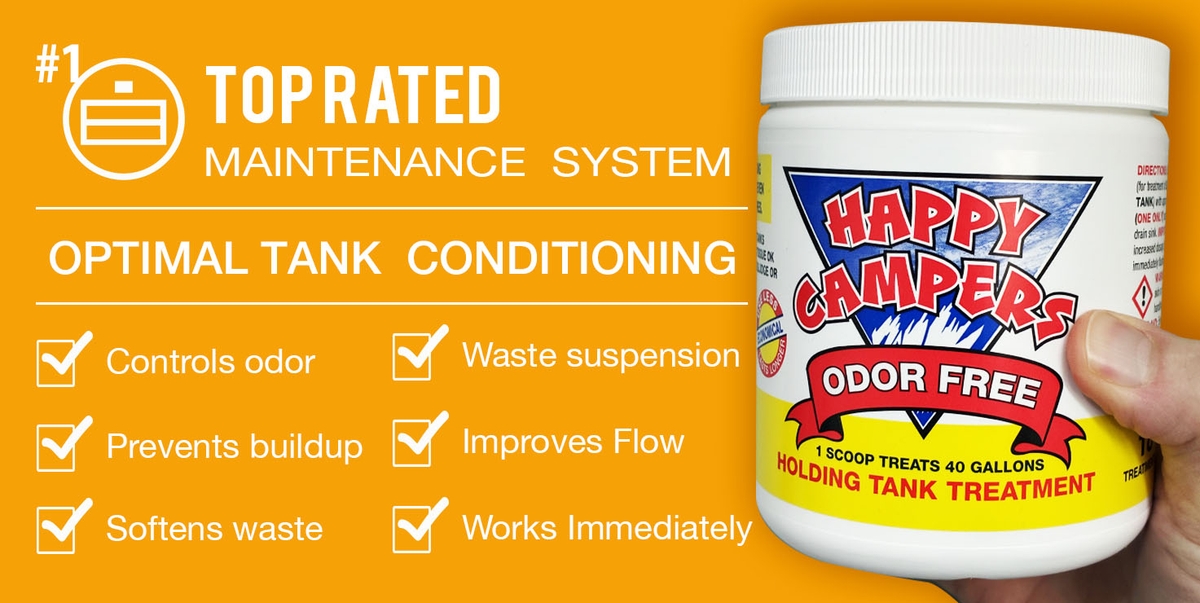
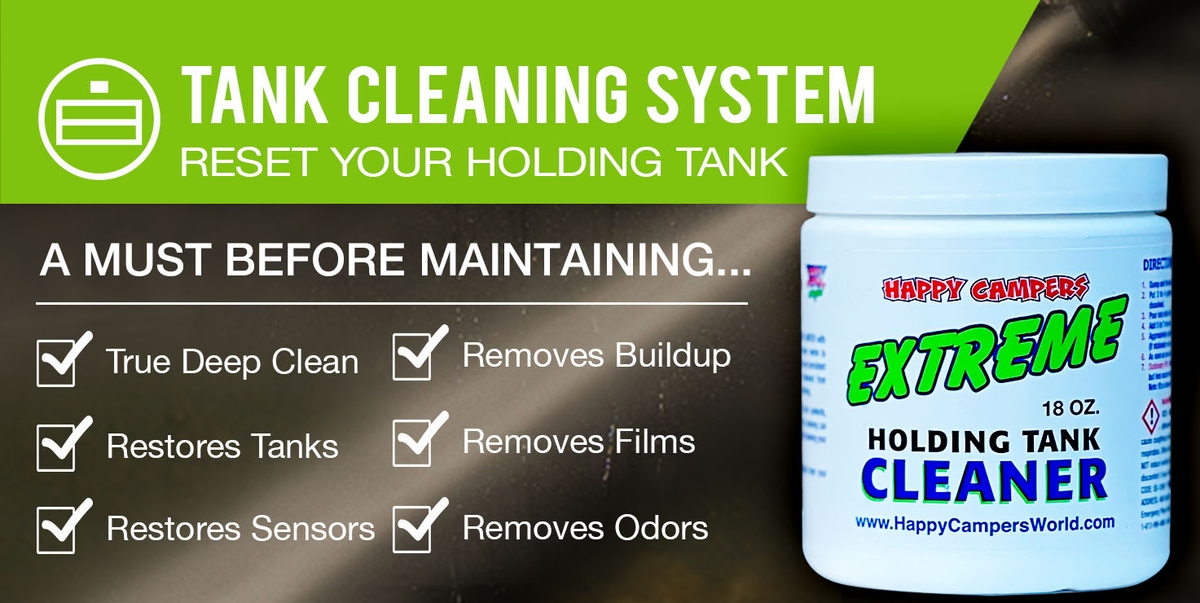
The Happy Campers Holding Tank Maintenance System
Learn the RV Tank System
Diagnose Tank Problems
Dump & Flush Properly
Deep Clean When Needed
Maintain Clean Tanks
Maintenance and Deep Cleaning Are NOT the Same Thing

Learn the RV Holding Tank System
Modern RV holding tank maintenance is more than simply dumping tanks and adding treatment. Understanding how dumping, hydration, diagnosis, deep cleaning, and ongoing maintenance work together helps prevent many common RV tank problems before they start.
These guides explain how RV black and gray tank systems work, how waste behaves inside holding tanks, and how proper maintenance practices help prevent odors, clogs, buildup, and sensor problems.
Diagnose RV Tank Problems Correctly
Odors, drainage issues, toilet problems, false sensor readings, and clogs often have different root causes. Proper diagnosis is the first step toward solving RV holding tank problems correctly.
Proper Dumping & Tank Flushing
Proper dumping and rinsing help reduce buildup, improve waste evacuation, and support better long-term holding tank performance.
Deep Clean RV Holding Tanks
When odors, sludge, grease film, sensor contamination, or recurring buildup problems already exist, corrective deep cleaning may be necessary before normal maintenance can work effectively again.
RV Holding Tank Maintenance Explained
Watch real-world demonstrations covering dumping techniques, deep cleaning, buildup removal, odor prevention, and long-term RV holding tank maintenance practices.
Maintain Cleaner RV Holding Tanks Long-Term
The best RV holding tank performance comes from combining proper dumping habits, accurate diagnosis, corrective deep cleaning when needed, proper hydration, and consistent maintenance treatment practices.
Happy Campers mineral-based holding tank treatments are designed to help support odor control stability and maintain cleaner tank conditions across a wide range of RV travel environments.